
Is It Safe to Use a Water Dispenser for Drinking Water?
Is It Safe to Use a Water Dispenser for Drinking Water?
Hydration is key to a healthy lifestyle, and for many of us, the office or home water dispenser is our primary source. It’s convenient, often provides chilled or instantly hot water, and looks sleek sitting in the corner of a room.
But have you ever paused mid-sip and wondered: Is this water actually safe to drink?
It’s a valid question. We’ve all seen a neglected water cooler with a dusty exterior, or heard horror stories about mold-growing reservoirs. Let’s dive into the science, the hygiene, and the best practices to answer once and for all: Is your water dispenser safe?
The Short Answer: Yes, But with Conditions
Generally speaking, water from a dispenser is safe to drink—provided the machine is properly maintained and cleaned.
In fact, most modern dispensers use bottled water that has already undergone rigorous purification processes (like reverse osmosis or deionization) before it even reaches your home or office.
However, the safety of the water doesn't just depend on the source; it depends heavily on the dispenser itself.
The Hidden Risks: What’s Lurking in Your Dispenser?
If a water dispenser isn't cleaned regularly, it can become a breeding ground for bacteria, mold, and algae. Here is what can go wrong:
- Biofilm Buildup: Every time a bottle is replaced, or air enters the reservoir, microscopic bacteria and dust particles are introduced. Over time, these microorganisms feed on minerals in the water and form a slimy layer called biofilm inside the tank and tubes.
- Mold and Mildew: The combination of moisture, warmth, and trapped air makes the internal reservoir a prime location for mold growth, particularly around the spout and the air intake valves.
- Contaminated Spigots: Think about how many hands touch the push-buttons or levers on a shared office water cooler. Without regular sanitization, the spigots can become vectors for cold and flu viruses.
Bottled vs. Bottleless: Does the Type Matter?
There are two main types of dispensers, and they carry different maintenance needs:
- Top-Loading/Bottom-Loading Bottled Dispensers: These use large 3-to-5-gallon jugs. The main risk here is the point of contact when you flip a new bottle onto the probe. If the top of the bottle isn't wiped clean before loading, dirt and bacteria fall directly into the reservoir.
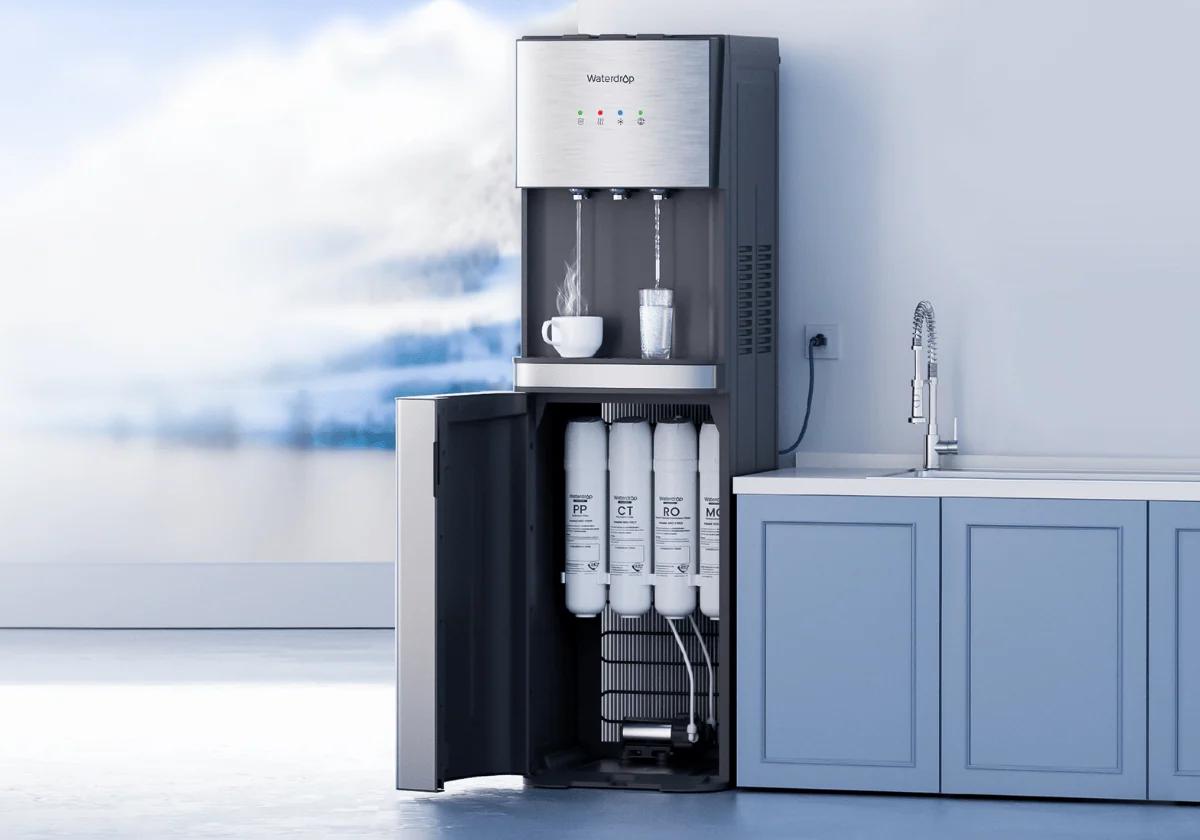
- Bottleless (Point-of-Use) Dispensers: These hook directly into your home or office plumbing system and usually feature built-in filtration systems (carbon filters, UV lights, etc.). While they save you from heavy lifting, the filters must be changed on schedule. A worn-out filter will stop removing contaminants and can actually release trapped bacteria back into your water.
How to Ensure Your Water Dispenser is Safe
You don't need to ditch your dispenser out of paranoia. You just need a solid maintenance routine. Follow these golden rules to keep your water crystal clear and germ-free:
1. Clean and Sanitize Every 3 to 6 Months
You should deep-clean your dispenser at least twice a year (or every 3 months for heavy-use office environments).
- The DIY Method: Unplug the unit, drain all the water, and remove the non-electrical parts (like the baffle and spigots). Wash them with warm, soapy water. For the internal reservoir, fill it with a mixture of water and a tablespoon of unscented household bleach (or a specialized water cooler cleaning solution). Let it sit for 5–10 minutes, drain it completely, and rinse it thoroughly with fresh water until the bleach smell is entirely gone.
2. Wipe Down the Spigots Regularly
Give the dispensing buttons or levers and the exterior nozzles a wipe-down with a disinfectant wipe at least once a week—especially if it’s in a shared space.
3. Wash Your Hands Before Changing Bottles
When replacing a water jug, wash your hands first. Wipe the cap and neck of the new bottle with a clean, damp cloth or sanitizer before peeling off the seal and flipping it onto the machine.
4. Change Filters on Time (For Bottleless Units)
If you have a plumbed-in system, set calendar reminders to replace the filters according to the manufacturer’s instructions—usually every 6 to 12 months.